See the system, not just the individual. Document family therapy your way.Built for marriage and family therapists.
Document family systems work with ease.Multi-client session management and relational diagnosis support for marriage and family therapists. Circular causality, family patterns, systemic interventions—AI that understands MFT frameworks.
See family therapy documentation in a quick demo.
PIPEDA-compliant • Family systems frameworks • Relational focus • You maintain full clinical responsibility
Request a Demo
See how AI captures family dynamics and relational patterns automatically.
We'll email you to schedule a convenient demo time.
Documentation captures circular causality, family patterns, relational dynamics—not just individual symptoms in isolation.
Track family sessions, couple sessions, parent-child dyads—multiple clients in one session properly documented.
Support for V-codes, relational problems, partner violence, parent-child issues—relationship-level diagnosis documented.
Why MFTs need specialized documentation
Family therapy is fundamentally different from individual therapy—documentation must reflect systemic thinking and relational focus.
Systems theory frameworks
MFTs think systemically—circular causality, feedback loops, homeostasis. Documentation needs systems language, not individual pathology focus.
Multiple clients per session
Family sessions involve multiple people—need to track who attended, individual concerns, relational dynamics, all in one session note.
Relational diagnosis codes
V-codes and Z-codes for relational problems—partner relational distress, parent-child problems require different documentation approach.
Individual therapy notes vs. family systems documentation
Most AI therapy notes are designed for individual work—missing the relational and systemic focus MFTs need.
Individual therapy documentation
- Single client focus—family dynamics and relational patterns not captured
- Linear causality language—doesn't reflect circular patterns and feedback loops
- Individual diagnosis codes only—V-codes and relational problems unsupported
- Can't track multiple attendees—family sessions hard to document properly
MFT systems documentation
- Family systems focus—relational patterns, interactional dynamics comprehensively documented
- Circular causality language—feedback loops, systemic patterns, homeostasis captured
- Relational diagnosis support—V-codes, Z-codes, partner relational distress documented
- Multi-client tracking—family members, couples, parent-child dyads all documented
Family systems elements documented
Everything that makes family therapy unique, automatically captured.
Family systems patterns
- Circular causality, feedback loops, systemic patterns identified
- Family roles, boundaries, hierarchies, coalitions documented
- Communication patterns, conflict cycles, interaction sequences
- Homeostasis, resistance to change, family equilibrium
Multi-client session tracking
- Session attendees documented—who was present tracked
- Individual concerns within family context—each person's perspective
- Couple dynamics, parent-child interactions, sibling relationships
- Family subsystems—couple subsystem, parental subsystem, sibling subsystem
Relational diagnosis
- V-codes and Z-codes: Partner relational distress, parent-child problems
- Relational problems related to mental disorder or medical condition
- Partner violence, child neglect, sibling rivalry
- High expressed emotion in family, disruption of family by separation
Systemic interventions
- Structural interventions: Boundary setting, hierarchy establishment
- Strategic tasks, reframing, paradoxical interventions documented
- Enactments, family sculpting, circular questioning used
- Genogram work, family timeline, attachment patterns explored
Family therapy documentation workflow
AI captures family dynamics and systemic patterns automatically.
1. Record family sessions
AI identifies family members present, relational dynamics, systemic patterns—multi-client sessions captured.
2. Systems-focused notes
Documentation uses family systems language, tracks relational patterns, identifies circular causality—MFT frameworks.
3. Relational diagnosis
V-codes, relational problems, family patterns documented—complete systems perspective in notes.
Family systems documentation
See how AI captures relational dynamics and systemic patterns.
Capture family dynamics
AI identifies family members present, interaction patterns, relational dynamics—complete family systems perspective captured in multi-client sessions.
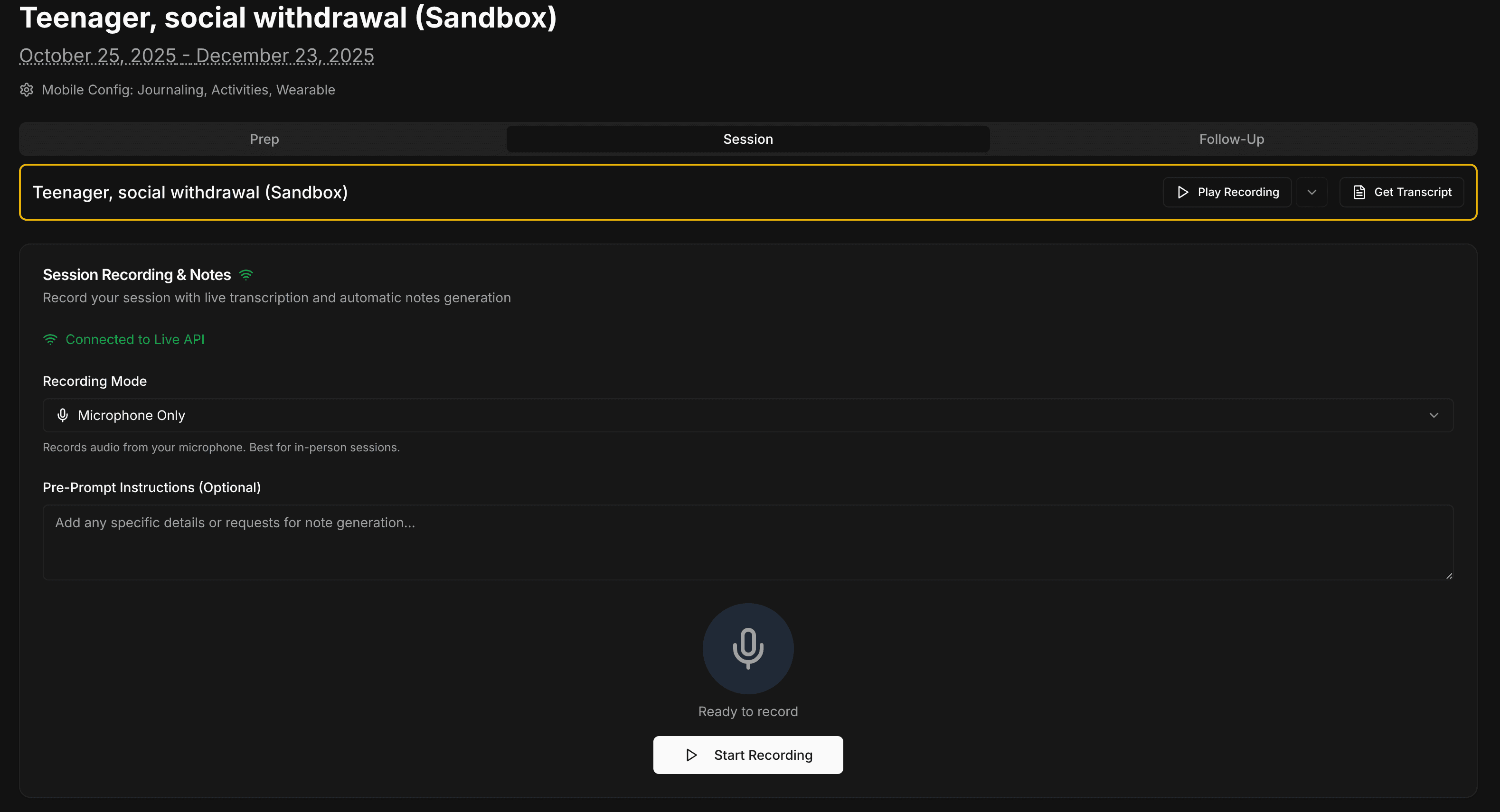
- Family members and relational patterns identified
- Systemic dynamics and circular causality captured
Family systems documentation
Notes use systems theory language, track relational patterns, support V-codes—MFT frameworks and multi-client tracking built into documentation.
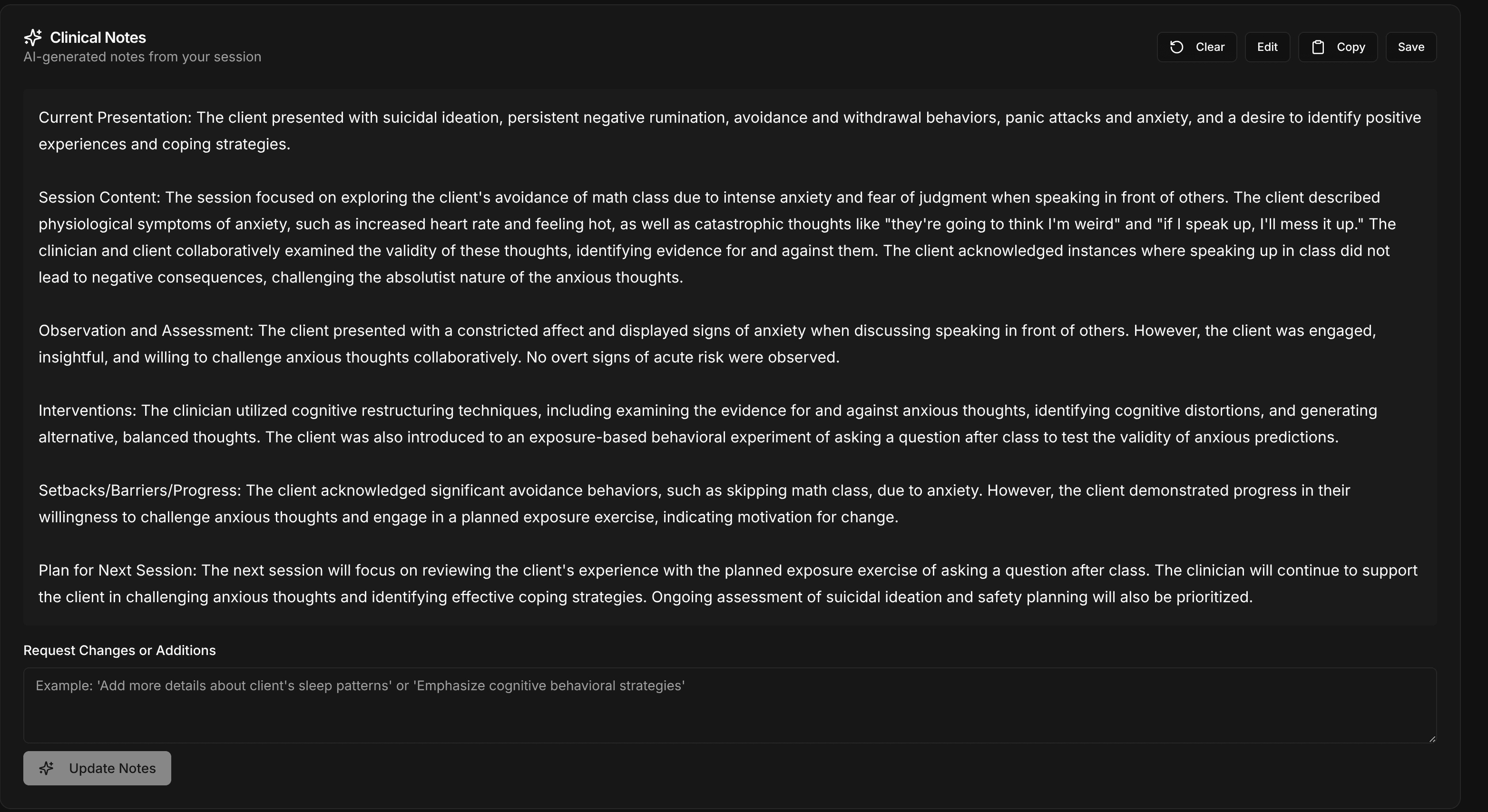
- Systems theory frameworks and terminology
- Multi-client tracking and relational diagnosis
Complete MFT workflow
Prep and follow-up support family therapy practice.
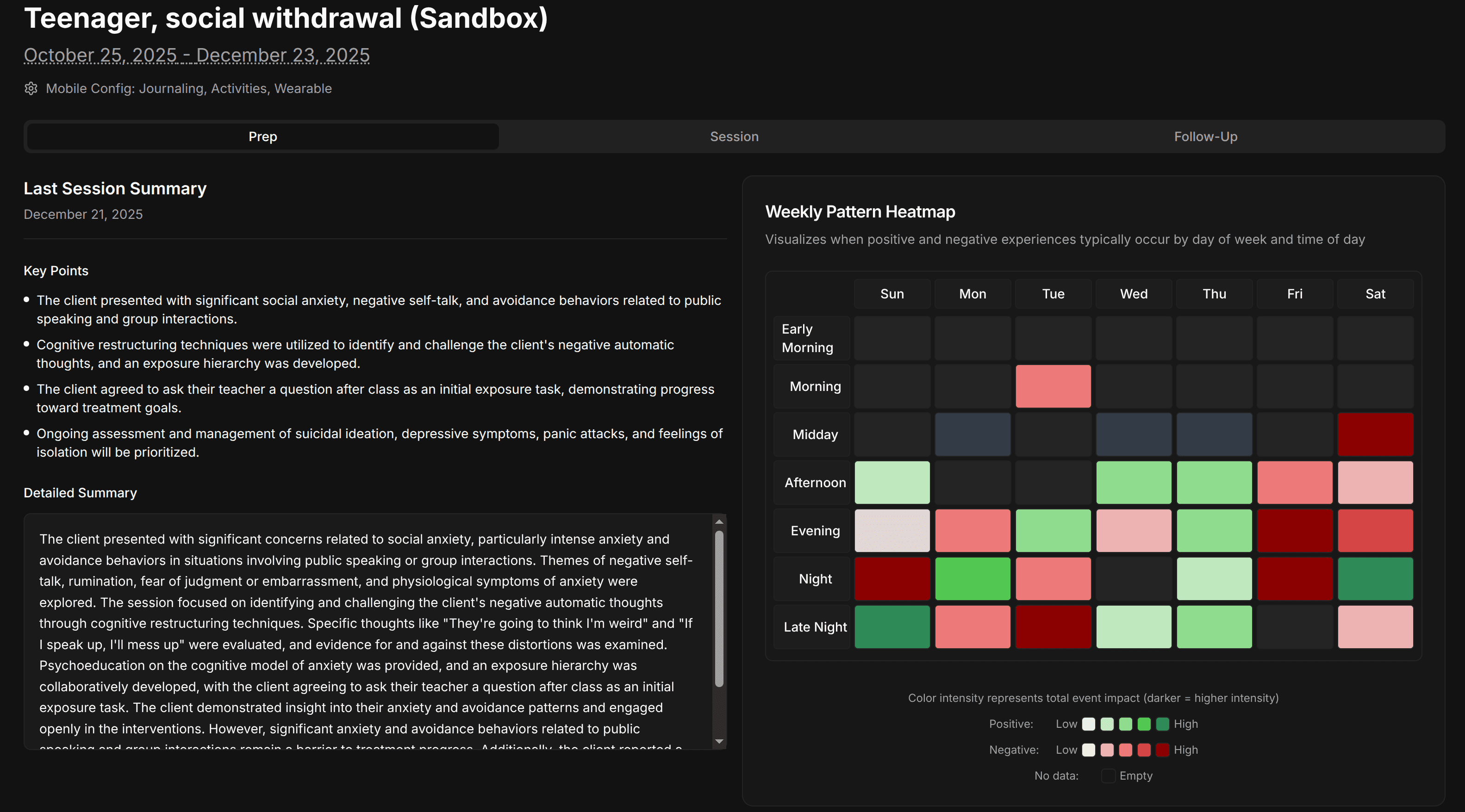
Family session preparation
Review family patterns, relational dynamics, systemic progress before sessions.
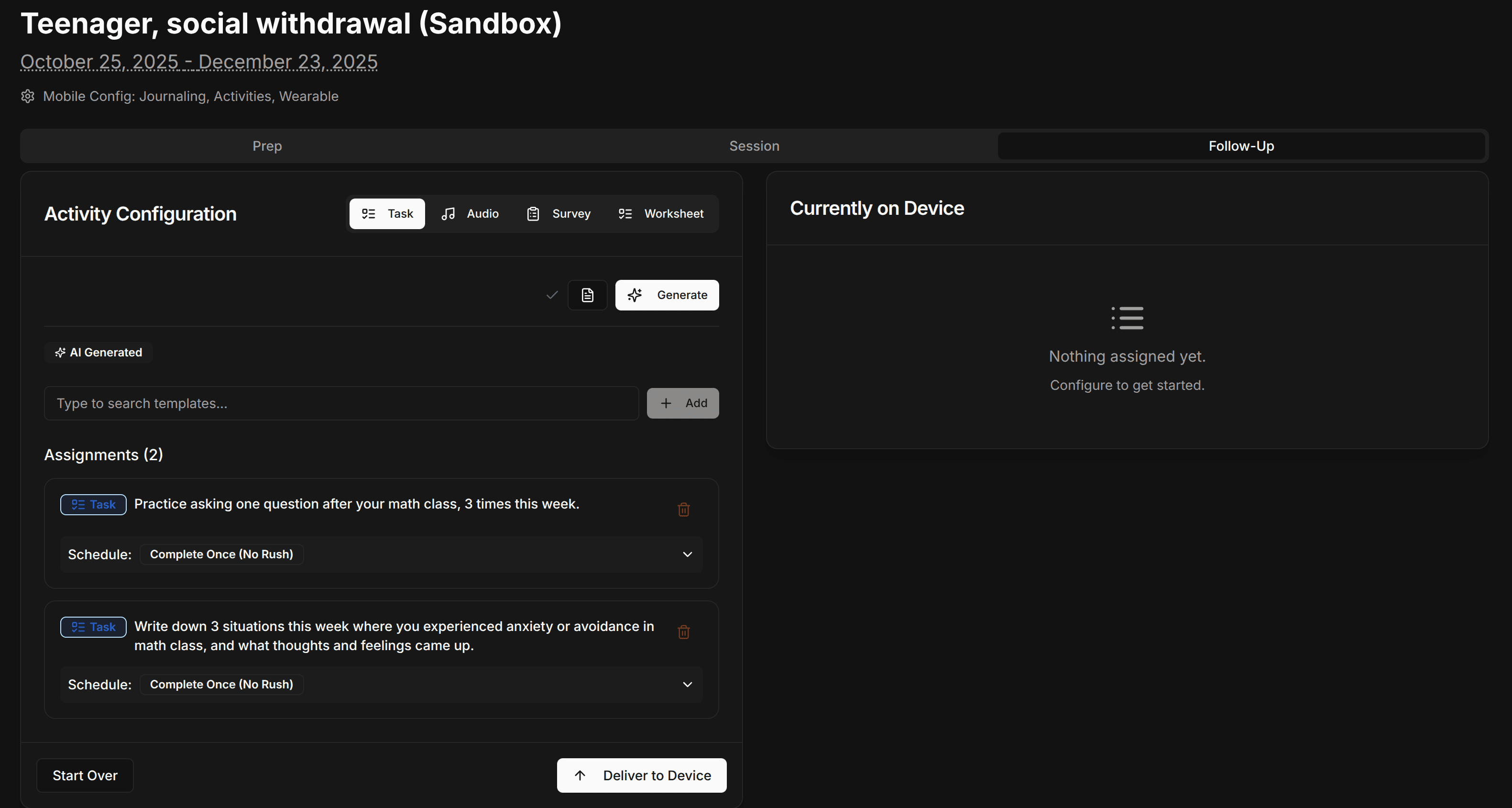
Family homework and resources
Share family exercises, communication tools, relationship resources.
Join marriage and family therapists who document systemically—family patterns tracked, relational diagnosis supported, circular causality captured. Notes that see the system, not just individuals.
Systems language, multi-client tracking, MFT frameworks.
“SOMA has been a real time-saver for my practice. The note and report templates are powerful and work really well for my needs - I can generate session summaries and case conceptualizations with just minor tweaks, if any. It's made my documentation process much more efficient and faster.”
Shannon
Counsellor
“With long-term clients, there's a real relationship built over time. I know most people would be very comfortable with it - especially if they're receiving information back on the app and they're not seeing everything else. The consent form really addresses the questions my more cautious clients would have.”
Anonymous
Counsellor
“I think what is special about SOMA is it's effectiveness... Being able to see everything in one go makes the clinical workflow more effective. The ability to have the prep, do the session, and do the follow-up work all in one place - that's really the big selling point for me.”
Harshita
Psychology Researcher
Ready for family systems documentation?
See how AI captures relational dynamics and supports MFT frameworks.Request a demo and experience documentation built for marriage and family therapists.
Learn more at www.soma-health.ca