Psychologists write reports after the kids are asleep because the working day has no room left for them. Sessions fill the calendar, so the writing slides into the evening — unpaid, off the clock, and done by the most skilled person in the practice. It taxes both the business and the person. The relief is simply getting those hours back.
I've heard this on call after call. The pattern is so consistent it stopped sounding like a complaint and started sounding like a structural fact about the work. So I want to name it plainly — and name what it costs.
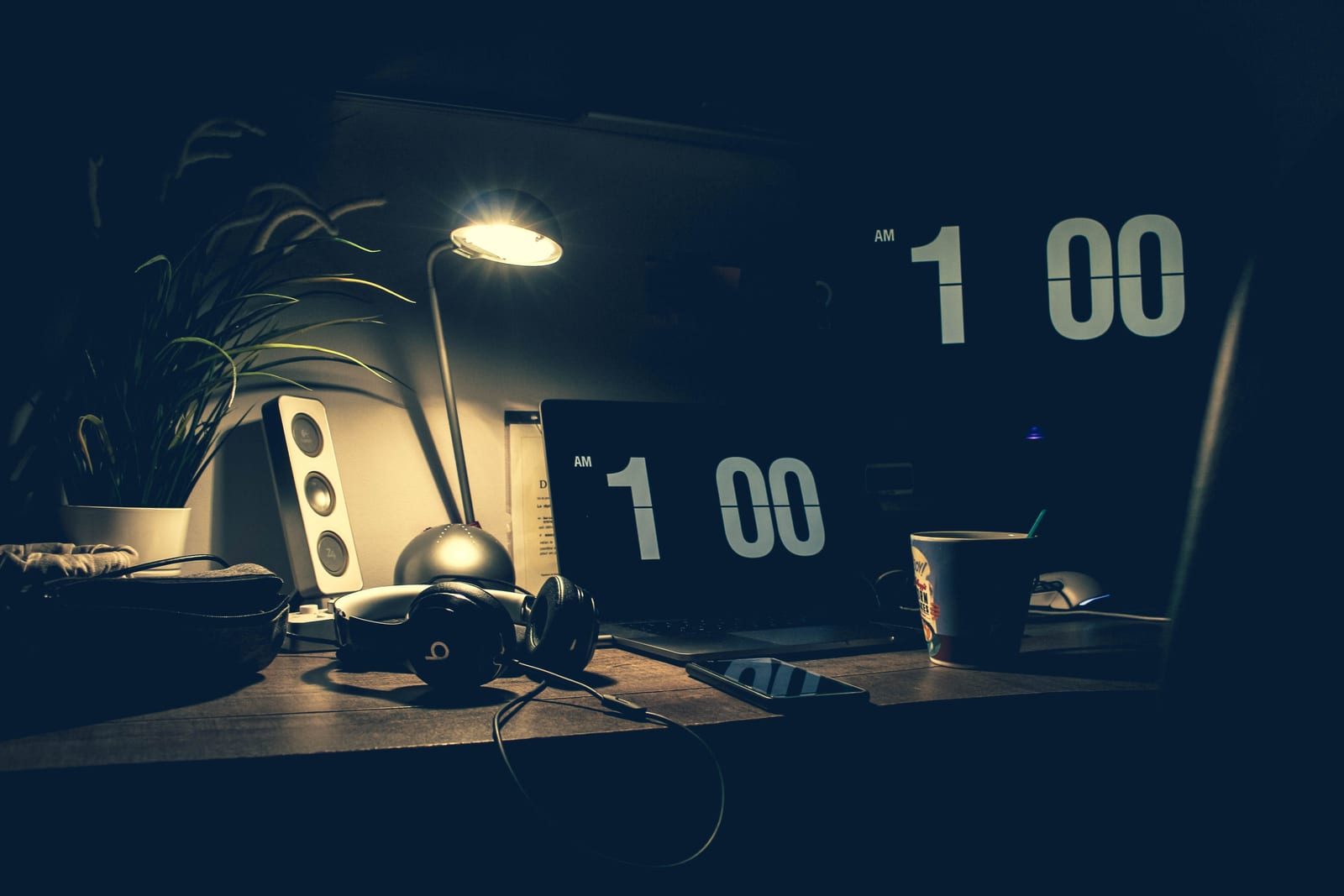
The writing slides into the only open space: the evening.
Why do clinicians write reports after hours?
Clinicians write reports after hours because there's nowhere else to put them. A full day of sessions doesn't leave a clear two-hour block for assembly, so the writing migrates to the only open space — the evening, after dinner, after the kids are down.
One clinician put it to me this way: "a big part of the unpaid work is the prep before and after a session." The session is the visible, billable part. The hours bracketing it are not.
So the report doesn't get skipped. It gets moved — to a time that doesn't belong to the practice at all.
How much unpaid time really goes to documentation?
More than most people outside the field would guess. In a survey of 93 health-service psychologists, most described themselves as working at or beyond capacity — 41% said they were "at full capacity," and another 39% said they were "over-extended." The non-billable clinical work sitting underneath that is the documentation tax, and a lot of it gets paid in evenings.
The same survey put non-billable clinical activities among the most commonly named sources of work-related stress, and tied workload to burnout. So it isn't only the hours. It's the weight of them.
And a thorough report isn't a quick form. The clinicians I talk to describe a single one running 10 to 15 hours of skilled, careful assembly — all of it unbilled. That's not a typo or an outlier. That's a normal week with one report in it.

The most experienced clinician, assembling a report at 10pm.
What does that cost a practice?
It costs the practice its most expensive time, given away for free. The person writing the report at 10pm is usually the most experienced clinician in the building — and every hour they spend assembling is an hour they cannot bill, rest, or spend with their family.
Run that math honestly. If a thorough report is 10 to 15 hours of unbilled work, the practice isn't "saving" anything by absorbing it quietly. It's paying for that time in evenings and weekends instead of dollars — which is a worse trade, not a better one.
There's a human line on the same invoice. The research is clear that high client volumes and long hours contribute to clinician exhaustion, and that inadequate resources and support make it worse. The after-hours pile is exactly the kind of load that wears people down over time — and good clinicians are not easy to replace.
So the cost shows up twice. Once as unbilled time on the books, and once as tired evenings that never make it onto any ledger at all.
The assembly burden stays flat across a whole career.
Why doesn't it just get faster with experience?
Because the slow part isn't the thinking — it's the assembly. The clinical judgment in a report is fast for an experienced clinician; what eats the hours is gathering, structuring, formatting, and stitching everything into a document that reads the way they want it to read.
Experience makes the judgment sharper. It doesn't make the typing, the reformatting, or the careful arranging any quicker. A veteran clinician still has to lay it all out by hand, the same as they did ten years ago.
That's why this never naturally improves. People assume it's a beginner's problem that fades — but the assembly burden is flat across a whole career. The most senior people carry the same load, just with more sessions stacked on top.
So "they'll get faster" is a comforting story that doesn't come true. The hours stay, the calendar fills, and the evenings keep absorbing the difference.
How do clinicians get those hours back?
By moving the assembly off their own evenings — keeping every bit of their judgment and voice, but not doing the manual stitching by hand. The goal isn't a faster typist. It's a draft that reads like theirs, so the clinician is reviewing and refining instead of building from a blank page after the kids are asleep.
That's the whole point of what we build at Soma. It's software for clinicians — not a provider, not a shortcut around their expertise. The clinician stays fully in charge of the clinical work. What changes is where the unbilled hours go: back to them. You can see how Soma drafts a report you review and sign.
And the value of a recovered hour is honest and simple. Every hour saved is an hour they can bill, rest, or give to their family. Those are three good options, and right now the late-night report quietly steals all three.
I'm a little protective of clinicians' time, and I won't pretend otherwise. The people doing this work are carrying a real, invisible cost — skilled hours given away after dark, week after week. Naming it is the first step. Giving it back is the work.
The short version
This is one branch of the larger report-writing problem in private practice, and it's tied up with how therapists actually cut documentation time. Reports get written after hours because the day is full, the assembly is heavy, and it never speeds up on its own. The cost is real on both sides of the ledger — unbilled time for the practice, lost evenings for the person. And the relief isn't complicated: those hours come back.
If you're the one still writing at 10pm, I see you. That time is worth more than the work is currently asking you to give for it — and you should get it back.
Thank you for the work you do, and for caring enough to do it well even when it costs you your evenings. It means a great deal to me that this is the problem we get to help with.
— Ian